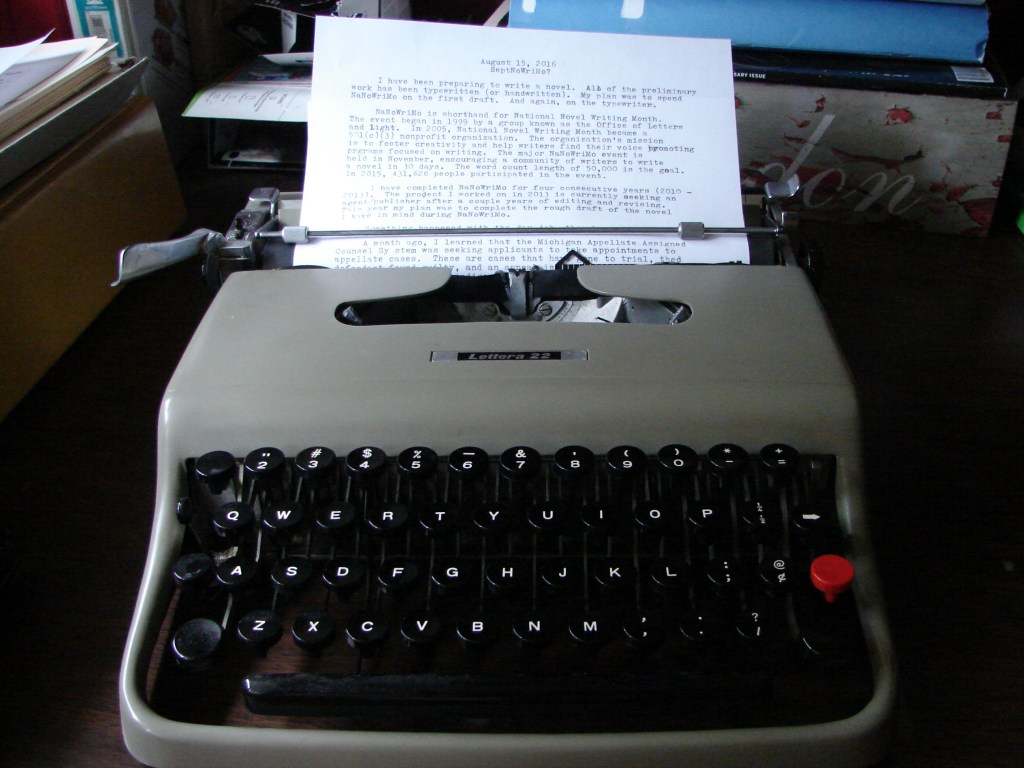
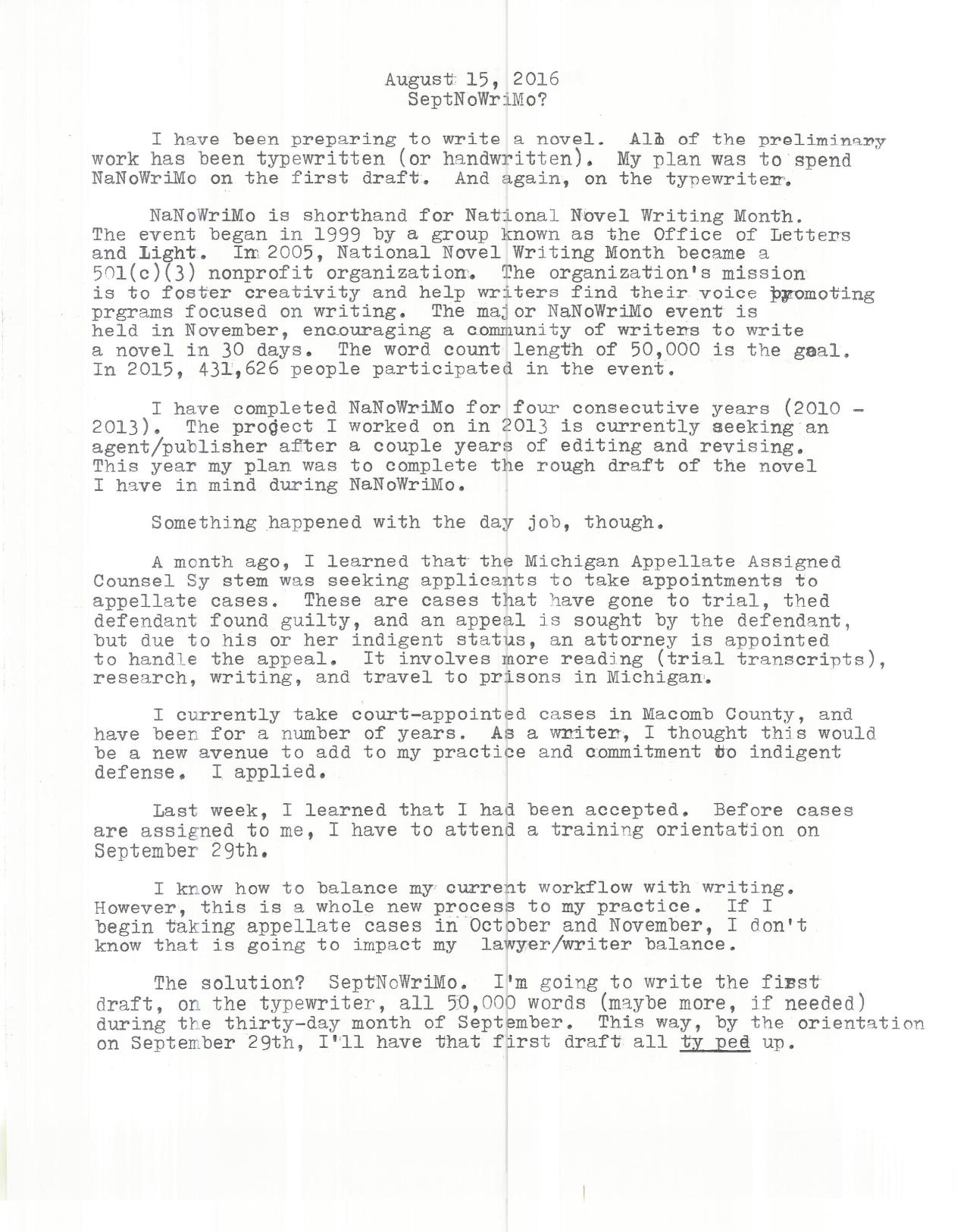
Later, I added 213 words, which put me at 2,668 words for the first day. A solid start.
I’m a little concerned, though. I planned out 20 chapters. The writing today put me at the end of Chapter Two. Obviously more fleshing out is going to be necessary as I move forward if I want to achieve 50,000 words at the end of this journey.
There was something else I became suddenly aware of. When I spend an hour or so in front of the computer writing, then walk away to pick up the mail or take the dog out, my eyesight is a little blurry, requiring a few minutes to adjust. After being in front of the typewriter for a period of more than two hours, no eye strain. Walking outdoors to get the mail and take the dog out, my vision was crystal clear.
Once upon a time, I had a favorite book store. It was Borders. From its Novi store opening in the mid-1980’s to its closing in 2011, I spent a lot of time (and money) in that second home.
Since its departure, I’ve explored the indies, and discovered many excellent book stores, each with their unique character. Literati Bookstore is one such treasure.
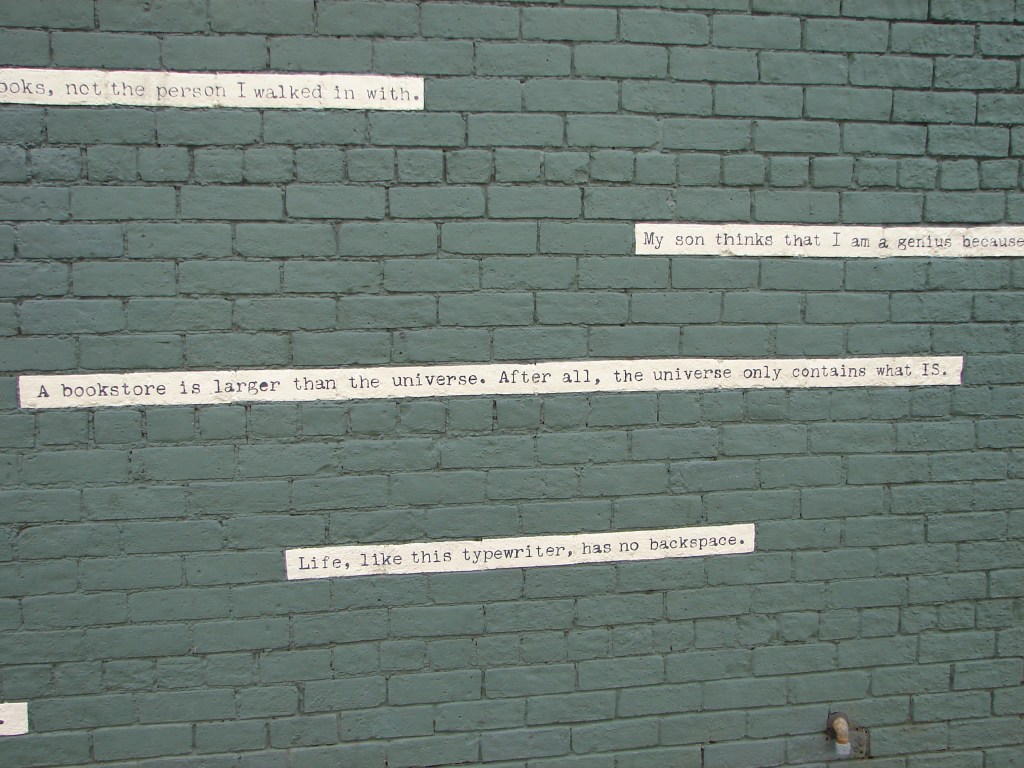
Located in downtown Ann Arbor, Literati opened in 2013. Fiction on the main floor, nonfiction on lower, the books are displayed on shelves from the old Borders stores. Typewriters shine in the front counter display case, with a manual Olympia on the lower level for patrons to type their thoughts. On the upper floor is a cafe, which was opened recently, where U of M students sit with their laptops and lattes, and author talks and book signings take place.
Samples of typed comments adorn the side of Literati Bookstore.
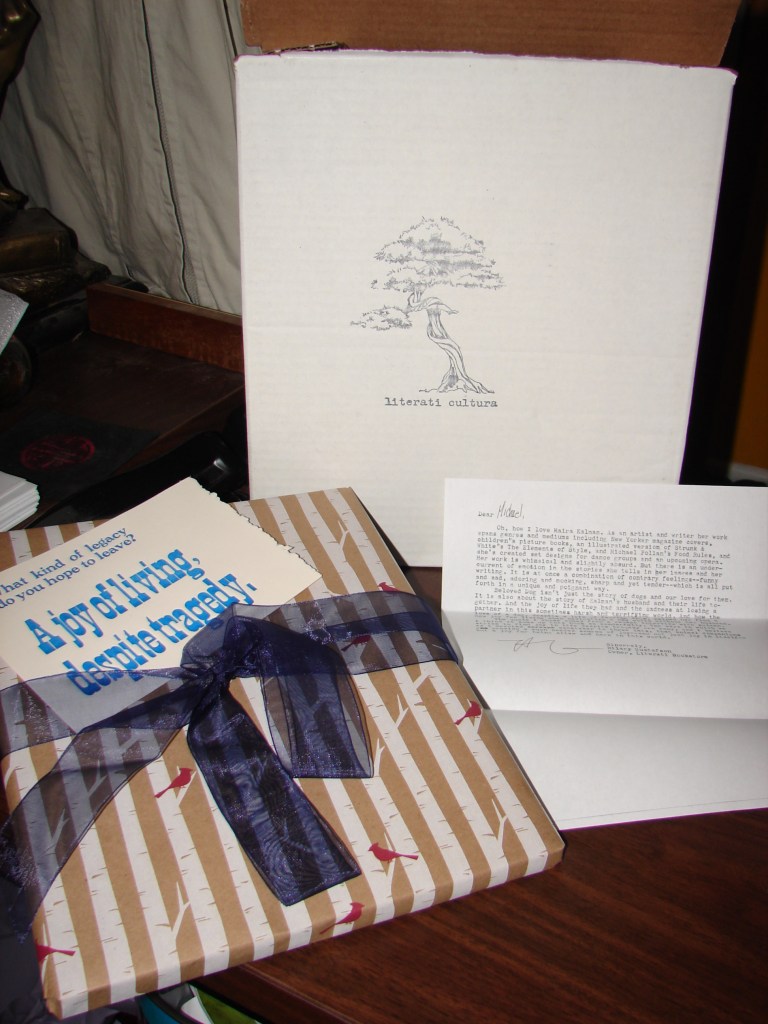
In September, 2015, the bookstore started a on-going, signed, first edition, subscription book club called Literati Cultura. Through this, readers enhance their own reading and exploration of new writing. It also allows bibliophiles to grow their libraries with signed first editions, creating a potential collectability element.
Each month, a Literati Cultura subscriber receives a hard cover, first edition book, signed by the author, as selected by owner Hilary Gustafson. Included is a typewritten letter from Ms. Gustafson, detailing why the book was selected, and a limited edition print by Wolverine Press. All this for cost of the hardcover book. If you live a distance from the store – like I do – they will ship it to you for the additional shipping cost. The selections thus far have been:
The Fates and The Furies by Lauren Groff. (Sept. 2015)
Mothers, Tell Your Daughters by Bonnie Jo Campbell (Oct. 2015)
Trace: Memory, History, Race, and the American Landscape by Lauret Savoy (Nov. 2015)
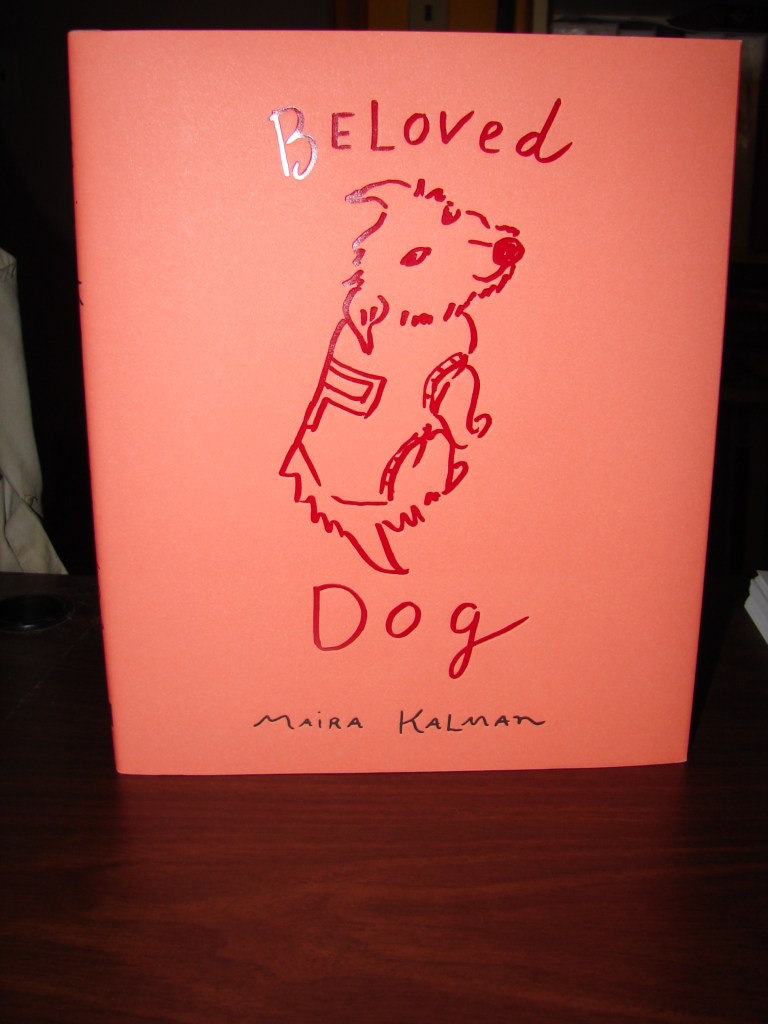
Beloved Dog by Maira Kalman (Dec. 2015)
My Name is Lucy Barton by Elizabeth Strout (Jan. 2016)
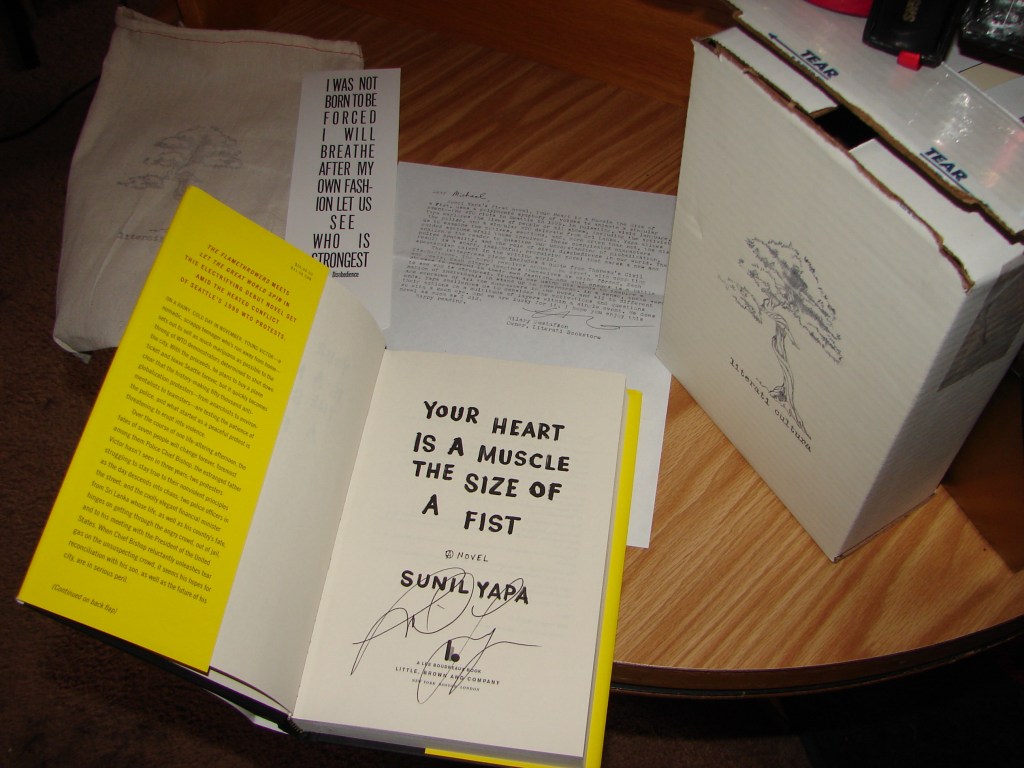
Your Heart is a Muscle the Size of a Fist by Sunil Yapa (Feb. 2016)
The Association of Small Bombs by Karan Mahajan (Mar. 2016)
Desert Boys by Chris McCormick (Apr. 2016)
Heat & Light by Jennifer Haigh (May, 2016)
The Girls by Emma Cline (June, 2016)
Miss Jane by Brad Watson (July, 2016)
This month, I’ll be receiving the twelfth book of the subscription – Another Brooklyn by Jacqueline Woodson, completing the first year of the club. I figured it was about time I start getting into these books, as they always seemed to arrive beneath the higher priority books I was reading. Of the eleven titles received thus far, I have only read one. After last night, I can now say I’ve read two.
Beloved Dog by Maira Kalman (Dec. 2012 selection) was an easy first book to read. Illustrator, author, and designer, Kalman tells the story of the her life with her husband and the sadness of losing him, and the how the love of a dog – an animal she feared throughout her life – opened her to a new joy for living. It was a quick read as the story is told with words and illustrations, and was approved by my beloved dog, Zen. I gave it the Goodreads rating of a 3 – I liked it.
Of the ten remaining books, the one that jumped out at me first was the February, 2016 selection, Sunil Yapa’s Your Heart is a Muscle the Size of a Fist.
It’s November 30, 1999, as nineteen-year-old Victor emerges from under the bridge of the Seattle freeway he slept beneath, into the organized chaos of ‘N30′ – the first day of the protests against the WTO Ministerial Conference. His step-father, Bishop, is the Chief of Police, and has not seen Victor since the boy left three years earlier to bare witness to the world. The story is told through these two characters, as well as King, a young woman activist with a not-so nonviolent past; King’s lover, John Henry, an older activist from the Vietnam-era; police officers Park and Julia who become engaged with the protestors; and Dr. Charles Wickramsinghe, the diplomat from Sri Lanka seeking to have his country become a member of the WTO.
The novel puts these characters not only into conflict with each other, but within themselves as they confront nonviolent protest, police brutality, and globalization. Yapa does this skillfully, not in a sententious way. The only feeling of stepping out of the novel and into the political came in the way the final chapters were written – from Chapter 40 on. It didn’t bother me as a reader, as it takes its shot at the media and the way such events are covered, but others may have a different opinion of whether it pulled too much away from the characters’ stories.
On the Goodreads scale, I give this book five stars – it was awesome. Some people like to read novels set during periods of war. I enjoy those that are set during occasions of protest.
It’s football season. Actually, when is it not football season?
More accurately, it’s almost time for the English Premiere League (EPL) to begin its 2016-17 season. It was the previous year that made sports history, and created a team of immortals.
Prior to the opening of the 2015-16 season, the bookmakers had Leicester (pronounced, ‘Lester’) City Football Club at 5000-1 odds of winning the English Premiere League. To put this in perspective, the 1980 US Olympic Hockey Team had 1000-1 odds of winning the gold medal in what has been called “The Miracle on Ice.” 5000-1 odds are given to events like finding Elvis Presley alive, capturing Bigfoot, and to see the Detroit Lions and Cleveland Browns meet in the 2017 Super Bowl.
The Foxes, as they are known, battled at the end of the previous season to avoid relegation, and fired their manager Nigel Pearson, replacing him with Italian Claudio Ranieri. Ranieri had managed a number of significant European clubs, such as Florentina, Valencia, Chelsea, Juventus, Roma, Inter Milan, and Monaco. In 2014, he was appointed the manager of the Greece National Team, but was discharged after four losing matches, including an embarrassing defeat to the Faroe Islands. Many pundits thought he would be the first manager to be sacked during the season.
The starting players were a band of misfits and castoffs, including:
A keeper, the son of a legendary Manchester United goalkeeper, who was allowed to leave his previous team in a lower league where the coach claimed that he wasn’t good enough,
A player who was surprised when he was sold to Leicester City by his previous team after helping them gain promotion to the Premiere League,
A defender sold by Chelsea, then cast aside by Stoke City.
A player released by the team he had been with since he was eight-years-old,
A player raised by Manchester United, but was loaned out to many clubs until finally sold to Leicester City,
A player who didn’t sign a professional contract until he was 19, having learned his soccer in the streets of Paris, not through an academy,
A player who was told he was too small and not good enough during his developmental years,
And a striker who was released by a club, almost quit soccer completely, and had to fight his way through the non-league ranks, including a spell where he was sentenced to a curfew and wore a tether on his leg. Yet, he would go on to lead the team in goal scoring, and set a league record by scoring a goal in eleven consecutive games.
Leicester City’s entire team payroll would equal the salaries of a handful of players on the elite teams in the league.
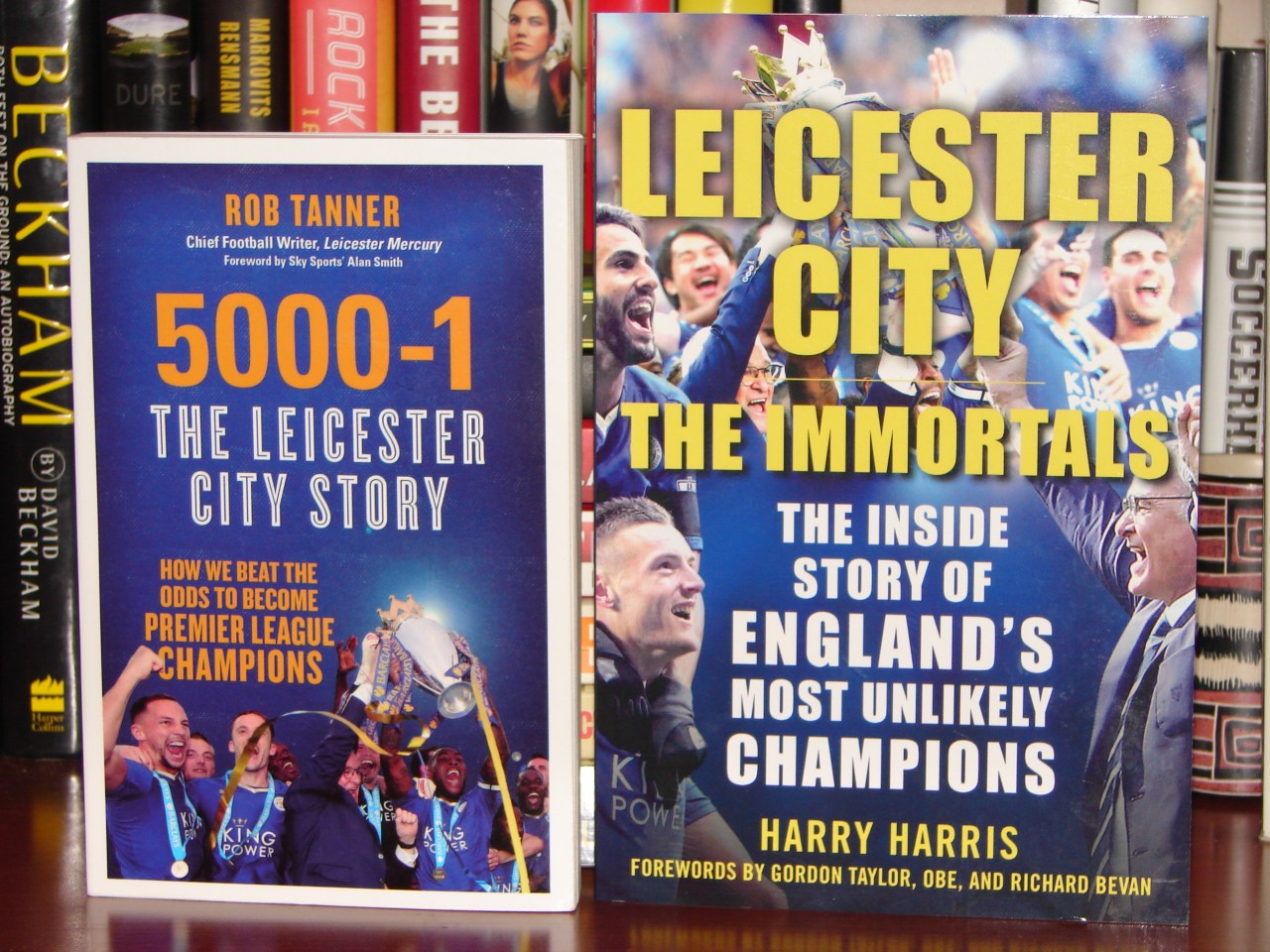
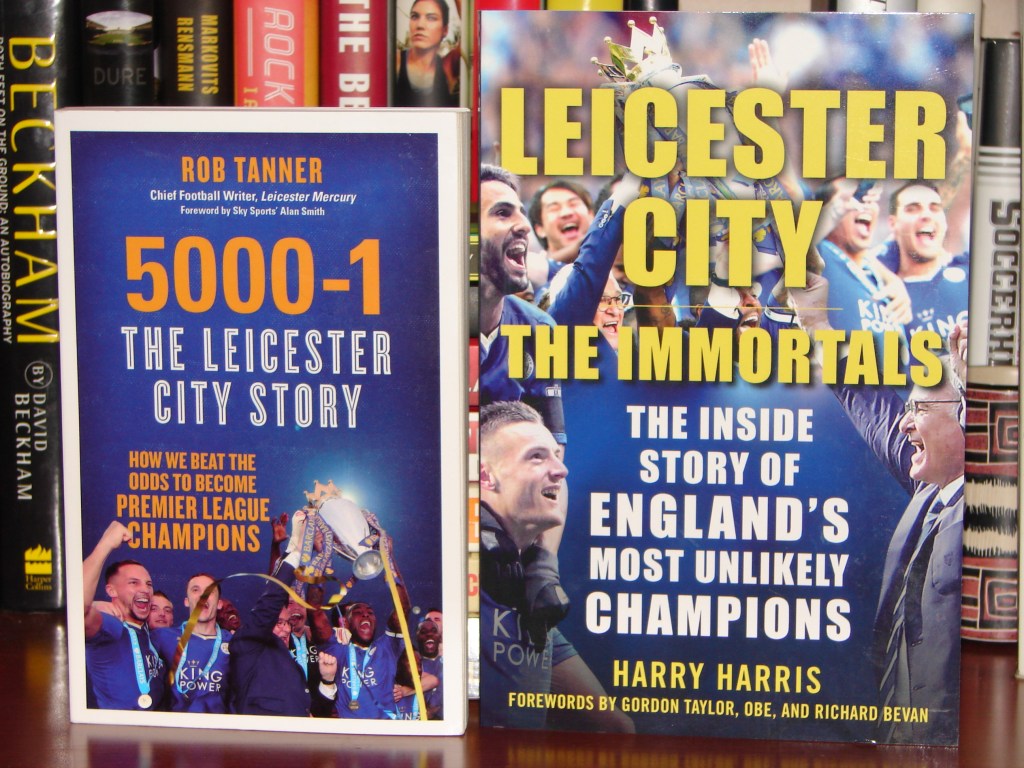
Two books have been released in time for the opening kick of the 2016-17 because this team defied the odds, the naysayers, and the world, to become the English Premiere League champions.
5000-1: The Leicester City Story is written by Rob Tanner, the Chief Football Writer of the Leicester Mercury. Tanner has covered the team since 2009, when the Foxes were in League One, the third tier of the English football league system. His proximity makes this a good account of the season, drawing on the events as they happened, with background details about the players and manager. Even though I am an Arsenal fan, I enjoyed reading this. Like so many football fans, Leicester City became my second favorite EPL team. It was hard rooting for them, especially since Arsenal was in the hunt for the championship. But Leicester City lost only three games during the season, and two of them were against the Gunners.
I have not yet read Leicester City The Immortals: The Inside Story of England’s Most Unlikely Champions by Harry Harris. Harris is a British sports journalist and prolific writer of football books, who has culled together a day-by-day diary of the season, combining history, news stories, and tweets of Leicester City’s season. I look forward to reading this book as well.
Leicester City’s miracle provides the cliche’ fictional rags-to-riches sports story, but packs more power, especially if you watched it as it happened. It demonstrated that you don’t have to have the brightest stars or the biggest stadiums to achieve great things. Claudio Ranieri woke up football’s elite with his surprising team and invisible bell.
And Claudio Ranieri is a living example that nice guys do finish first. Tanner quotes Ranieri on the eve of becoming England’s champion,
Once in the life this could happen…that is football…once every 50 years a little team with less money can beat the biggest. Once. Everyone is behind us. There is a good feeling about this story. It is a good story but it is important to finish the story like an American movie, with a happy ending.
On May 1, 2016, Leicester City had the chance to claim the championship at Manchester United with a victory. The Foxes earned a point with a 1-1 draw, forcing Tottenham to win against their London rival, Chelsea, the next night. Tottenham had not won at Stamford Bridge in 26 years, but when Spurs went into the dressing room at halftime with a 2-0 lead, the focus in Leicester City started to sway toward their next home game against Everton.
Then, this happened….
The game progressed, then this happened…
The final minutes couldn’t tick by fast enough for Leicester City fans. When the final whistle blew, the pubs in Leicester City looked liked this…
And the players? The scene at Jamie Vardy’s house…
Just like an American movie, it had a happy ending.
I would definitely recommend Tanner’s book because his perspective is from the inside as the local journalist who has covered the team. Harris’ account looks to be more observational from the outsiders view, thick with detail, including a summary for all 38 games, and team statistics, which appeals to me as well.
Depending on the bookmaker, the odds of Leicester City winning the 2016-17 English Premiere League championship range from 28-1 to 33-1, and anywhere from 66-1 to 100-1 to win the UEFA Champions League.
In January 2015, 564,708 people were homeless on a given night in the United States.
Of that number, 206,286 were people in families, and
358,422 were individuals.
About 15 percent of the homeless population – 83,170 – are considered “chronically homeless” individuals.
About 2 percent – 13,105 – are considered “chronically homeless” people in families.
About 8 percent of homeless people- 47,725 – are veterans.
There is no single silver bullet to put an end to this problem. But twelve years ago I discovered a resource, for people who enjoy reading, that assists people living without homes.
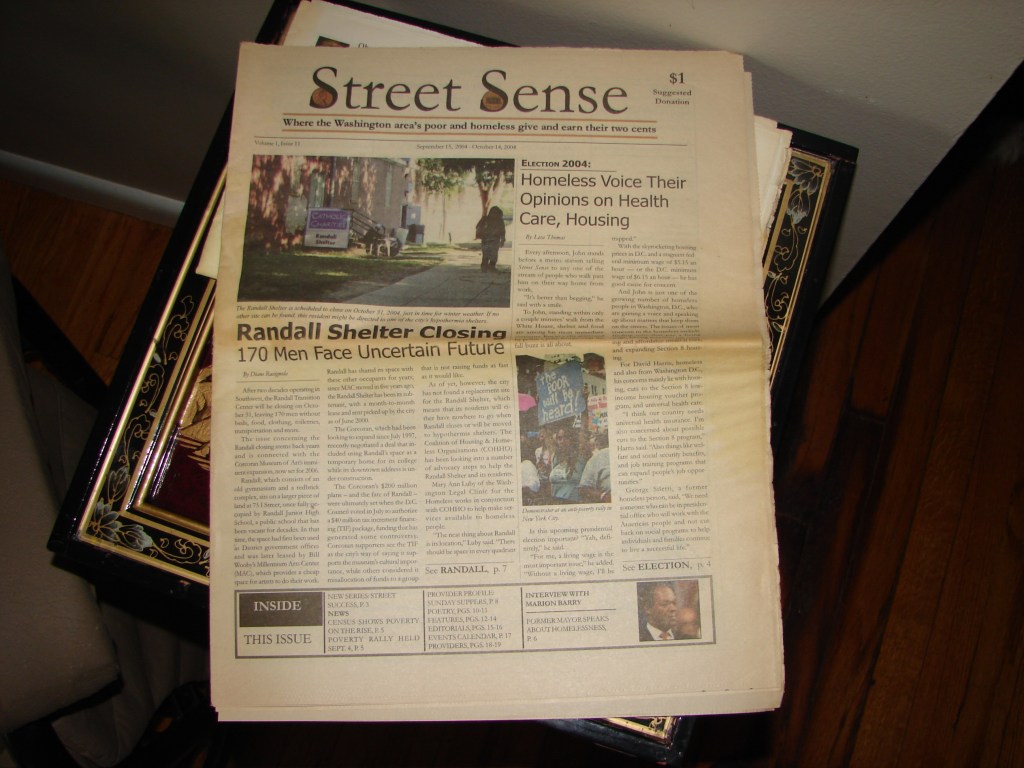
In 2004, while in the nation’s capital, one of the many homeless people I saw sold me a newspaper. It was called Street Sense, a street newspaper that brings awareness to the community about poverty and homelessness. Seventy-cents of the dollar I paid the vendor went to him. It is one of 112 street newspapers in 35 countries.
Here in Michigan, there are three such street newspapers.
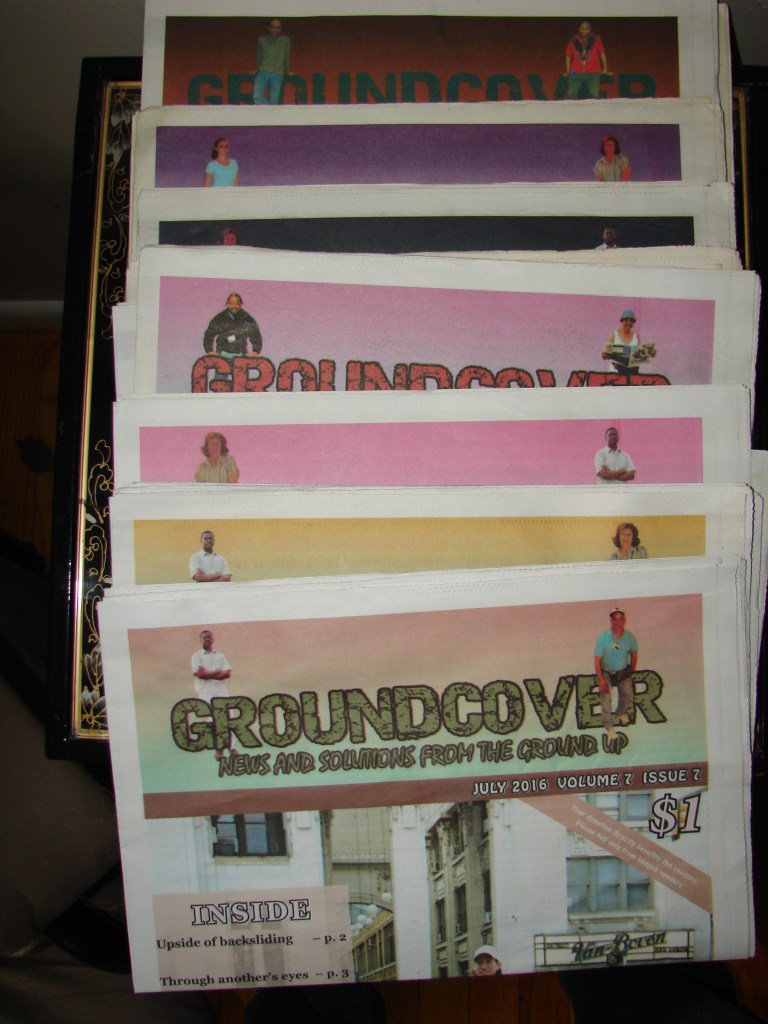
Groundcover: News and Solutions from the Ground Up is Ann Arbor’s voice for low-income and homeless people. Established in 2010, my introduction to Groundcover came at the 2012 Ann Arbor Art Fair where the organization has a booth in the nonprofits section on Liberty Street. The twelve-page monthly provides a variety of features including topical articles on poverty and homelessness, informational pieces on agencies, health features, book reviews, vendor interviews, and first-person pieces and poetry written by vendors. And, as with the typical daily newspapers, there are coupons, recipes, a comic strip, a crossword puzzle and Sudoku.
In February, I attended a symposium hosted by the Michigan Journal of Race and Law and the University of Michigan Law School titled Innocent until Proven Poor: Fighting the Criminalization of Poverty. The two-day symposium included Vanita Gupta*, Principal Deputy Assistant Attorney General and Head of the Justice Department’s Civil Rights Division as keynote speaker, panel discussions, and workshops covering topics such as Ferguson, MO, policing and regulating the poor, jailing the poor, and others. Susan Beckett, publisher of Groundcover, wrote insightful opinion pieces on the topics of “pay or stay” sentencing (a judge’s order at sentencing for the defendant to pay fines & costs or go to jail), money bail, and indigent defense in the April, May, and June 2016 editions, respectively, based on information presented at the conference.
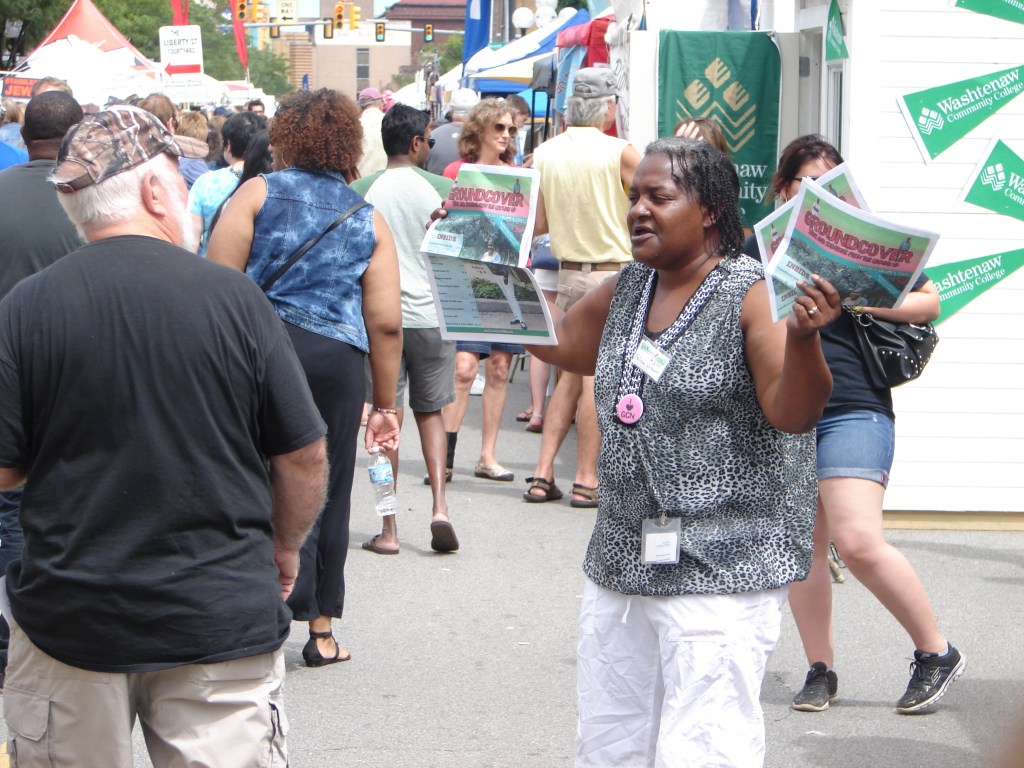
Usually, you can find vendors selling Groundcover on the streets of downtown Ann Arbor. Except during the Art Fair. During that time, the City of Ann Arbor invalidates their solicitor permits, except for at the Groundcover booth.
Groundcover vendor Felicia selling July, 2015 issues, which included an interview of her, at the Groundcover booth at the Ann Arbor Art Fair, 2015.
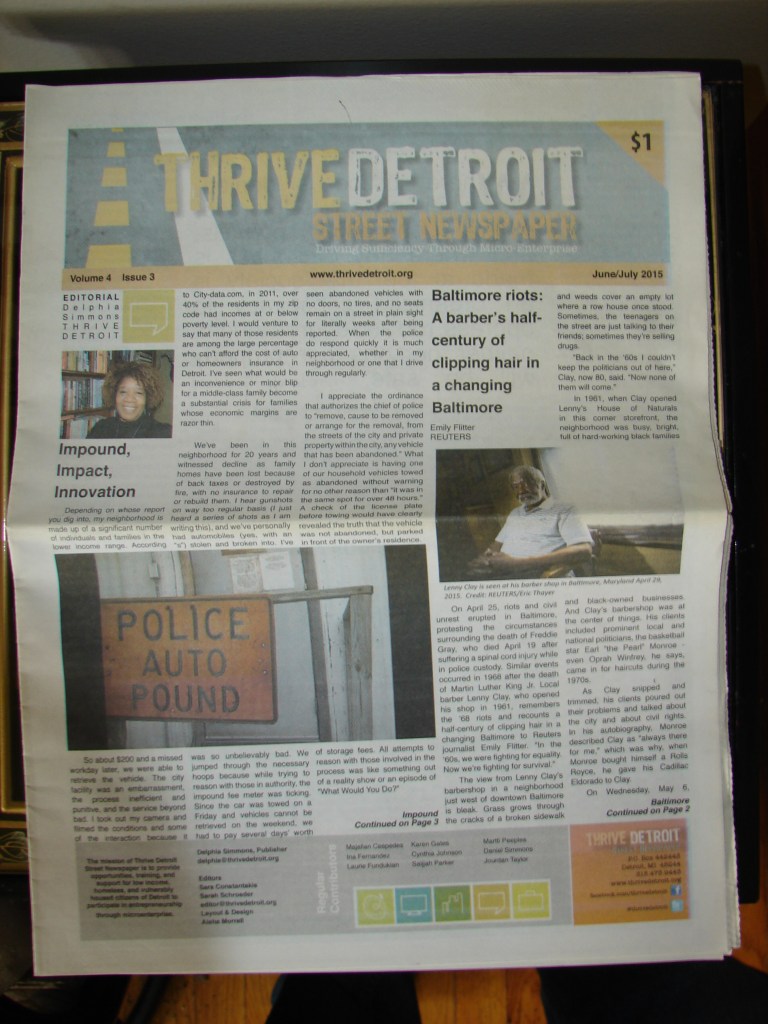
In Detroit, Thrive Detroit Street Newspaper: Driving Sufficiency Through Micro-Enterprise is the street paper assisting the city’s low-income and homeless. Founded in 2011, the dollar you pay the vendor puts seventy-five cents into his or her pocket. I spend time downtown at events and such, but I have not yet been approached by a vendor. The only copy I have I found was purchased at Source Booksellers on Cass. But I’ll keep looking for them.
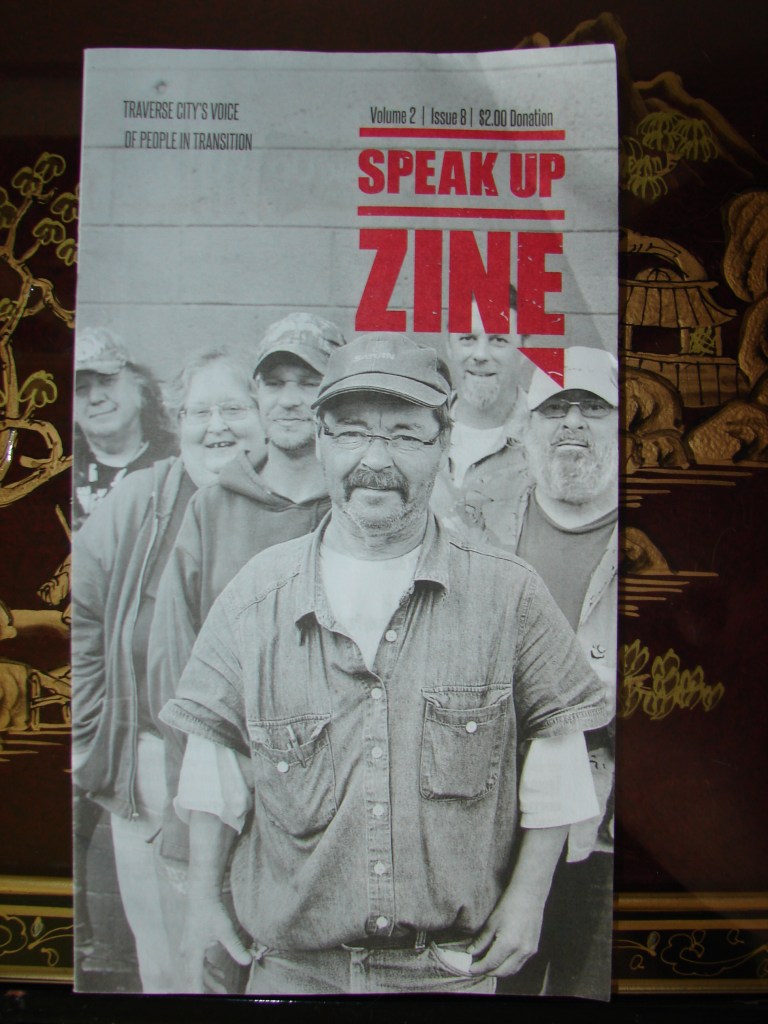
In November, while up in Traverse City for the annual Criminal Defense Attorneys of Michigan conference, I met Steve across the street from one of my favorite hangouts, Horizon Books. He sold me Speak Up Zine: Traverse City’s Voice of People in Transition. Launched in 2014, the 24-page zine is worth the two-dollar donation, with a $1.60 going into Steve’s (or other TC vendors’) pocket. The format is different, and has a more personal approach to it with vendors contributing a lot of the content. Steve was quite proud to show that he was front and center on the cover of this issue.
The skeptics will ask, “How do I know the person is selling me an actual street paper and not something phony just to make a buck?” The street papers enforce a vendor code of conduct which includes such ground rules as not asking for more than the cover price, selling only current issues, and by wearing and displaying a badge while selling the papers. The badge or some form of outward identification is the key. Furthermore, the vendors are not to hard-sell the public, and are not to sell additional products or panhandle while selling the paper.
Poverty and homelessness is a huge issue in this country. The Guilty Until Proven Poor symposium offered a vast amount of information on how our society uses laws and the judicial system to penalize a person for being poor, and a recent panel discussion at Pages Bookshop with contributors to the newly released book, Ending Homelessness: Why We Haven’t, How We Can (Lynne Rienner Publishers, 2016), broadened the discussion. There is not enough space here to tackle the issue, nor is that the purpose of this article. It can be overwhelming in considering which actions we, as individuals, can take. We can volunteer our time and bring community together, like what is done at Cass Park on the 2nd and 4th Sundays of the month. And we can choose not to turn away from a street paper vendor. Approach him or her and buy a paper from them. Not only will you be helping someone, but you’ll also have some thoughtful reading material to enjoy.
*Ms. Gupta’s keynote remarks and other articles based on the symposium can be found in Volume 21, Issue 2, the Spring 2016 issue of Michigan Journal of Race & Law.
I was out of sorts. My novel completed, out seeking a partner to bring it to readers. Tightening and polishing rejected short stories. Planning my next novel, its first draft to be typewritten during November’s National Novel Writing Month. Falling behind in my reading. Seeing my work through a new writers groups’ eyes. It felt like I’d stepped beyond the point in the lake where the bottom dropped off, my feet no longer planted, my arms splashing to keep my head above water.
I needed to breathe.
I’ve been reading The Great Spring: Writing, Zen, and This Zigzag Life by Natalie Goldberg. It triggered the memory of another book of hers; The True Secret of Writing: Connecting Life with Language. A book about her True Secret of Writing retreats.
Flipped my calendar open. The coming five-day week had no court appearances. No appointments. No Detroit City FC matches. Wife out of town for the month. House completely to myself.
A Zen/writing retreat. Exactly what I needed.
Since her seminal work, Writing Down the Bones: Freeing the Writer Within, Ms. Goldberg has taught an approach to writing as a practice. Influential to my writing, back when I first discovered this book, was the following passage:
When you write, don’t say, “I’m going to write a poem.” That attitude will freeze you right away. Sit down with the least expectation of yourself; say, “I am free to write the worst junk in the world.”
I didn’t have to write something great each time I put words to paper. Freedom.
She also presses handwriting for writing practice. Back then, I did. For a spell. But any insights were lost due to my illegible handwriting. For the retreat, I would type.
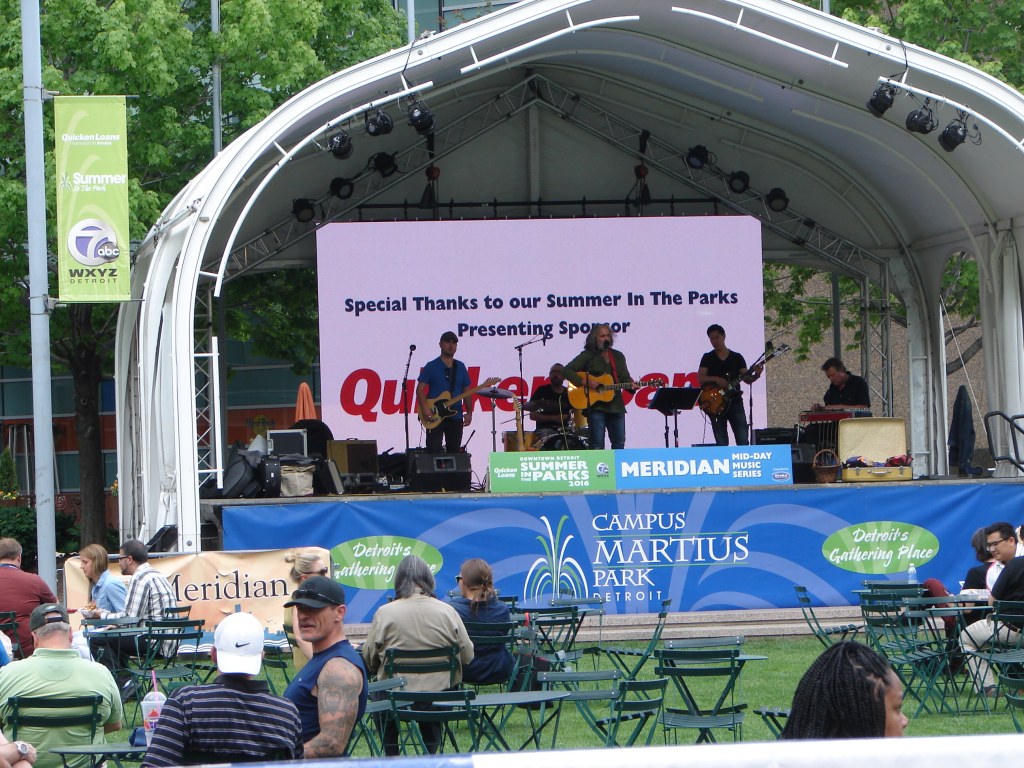
Bad luck. Country music in Campus Martius.
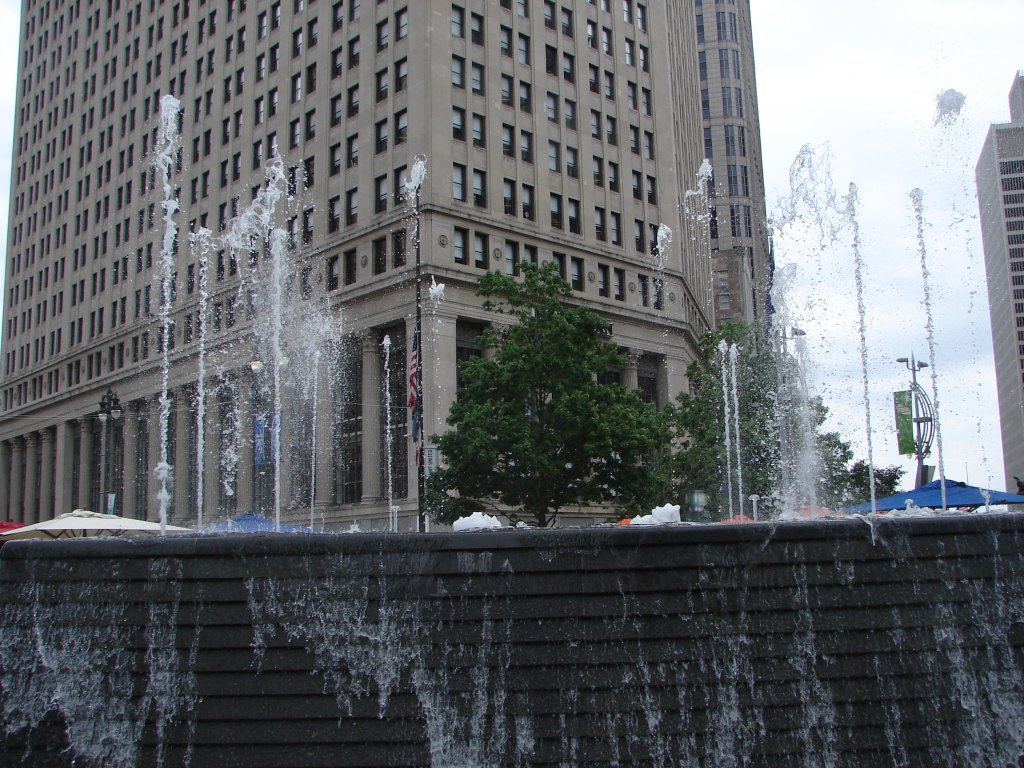
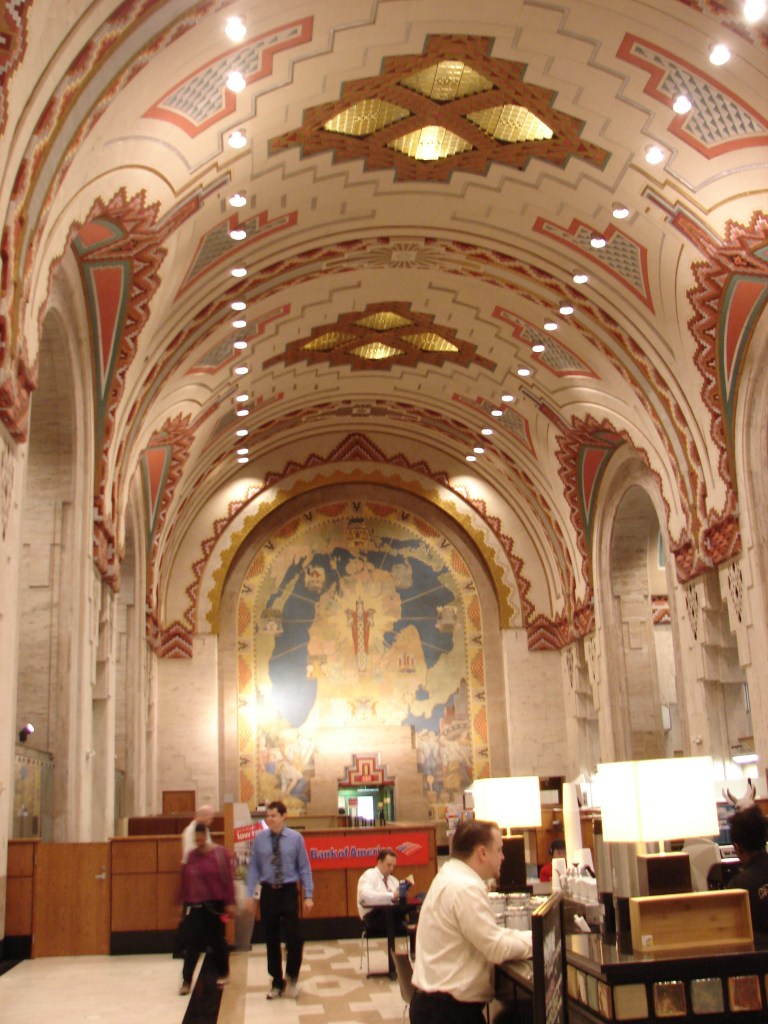
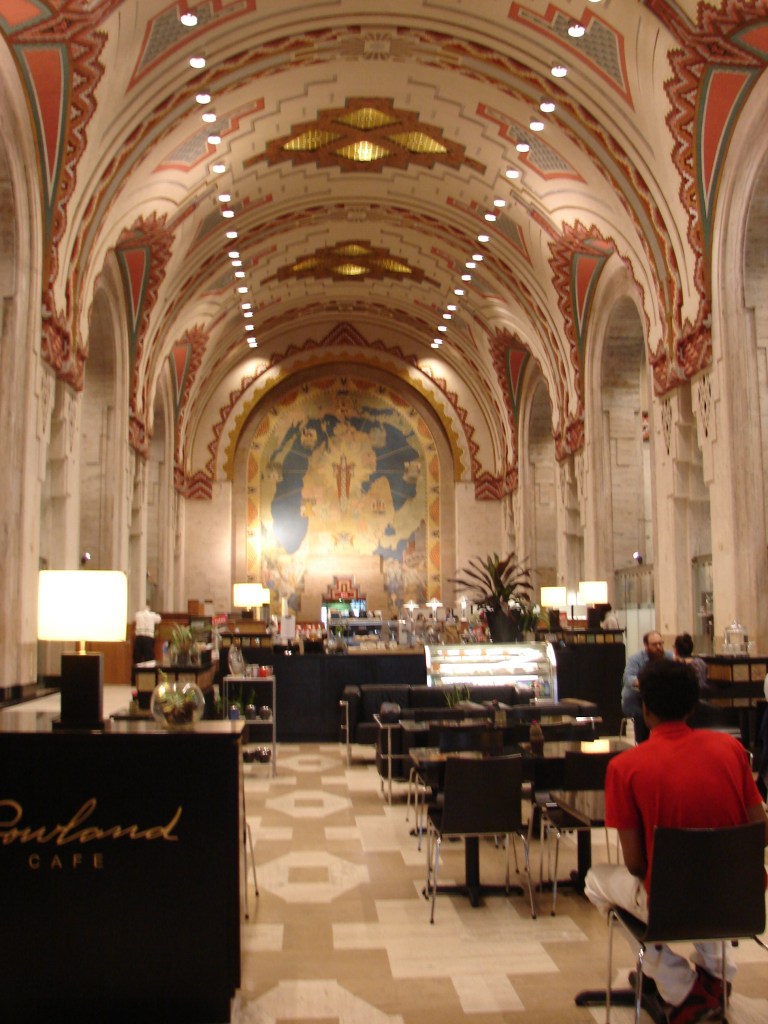
After purchasing lunch in the Guardian Building, I pulled out a pen and opened my notebook.
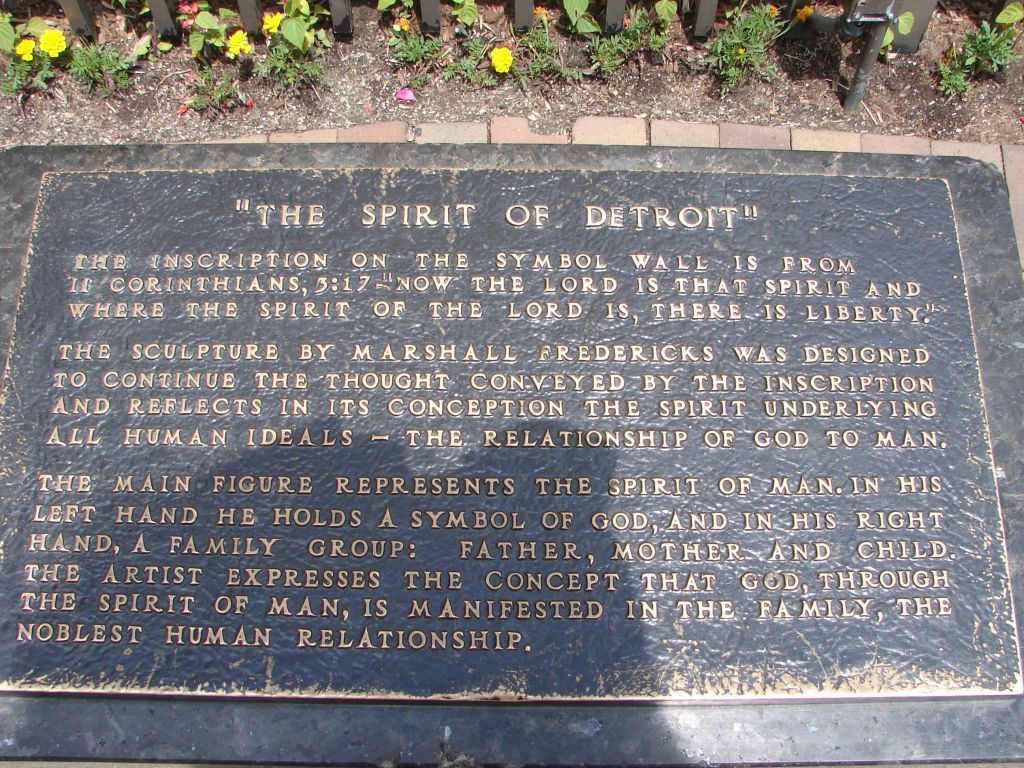
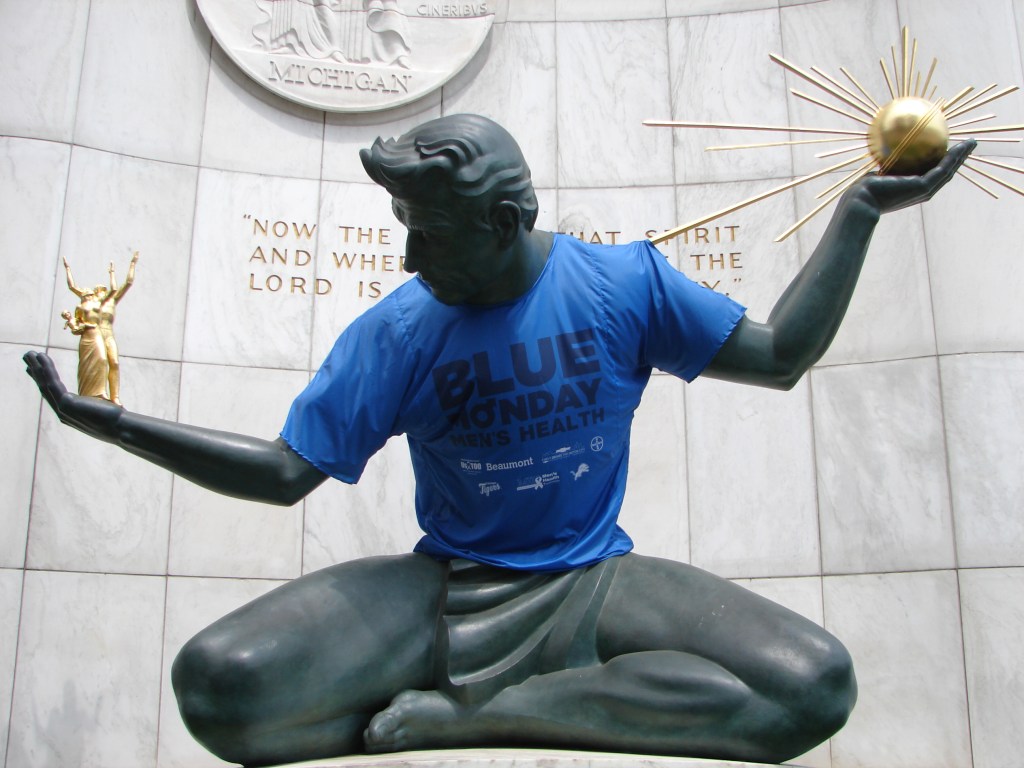
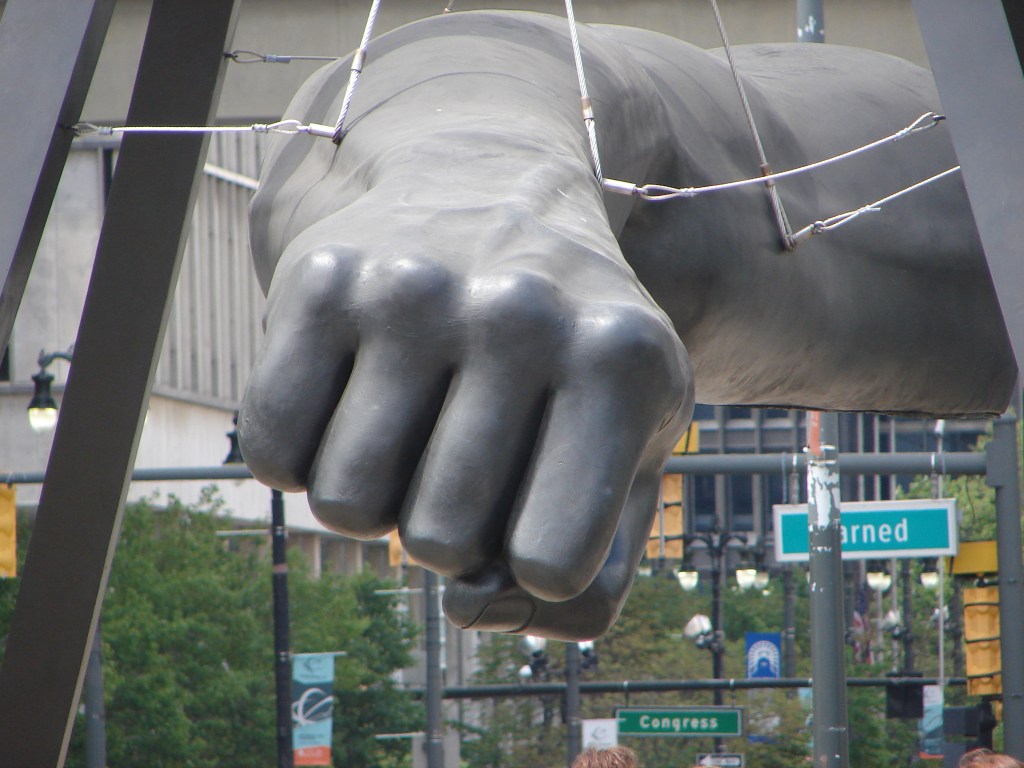
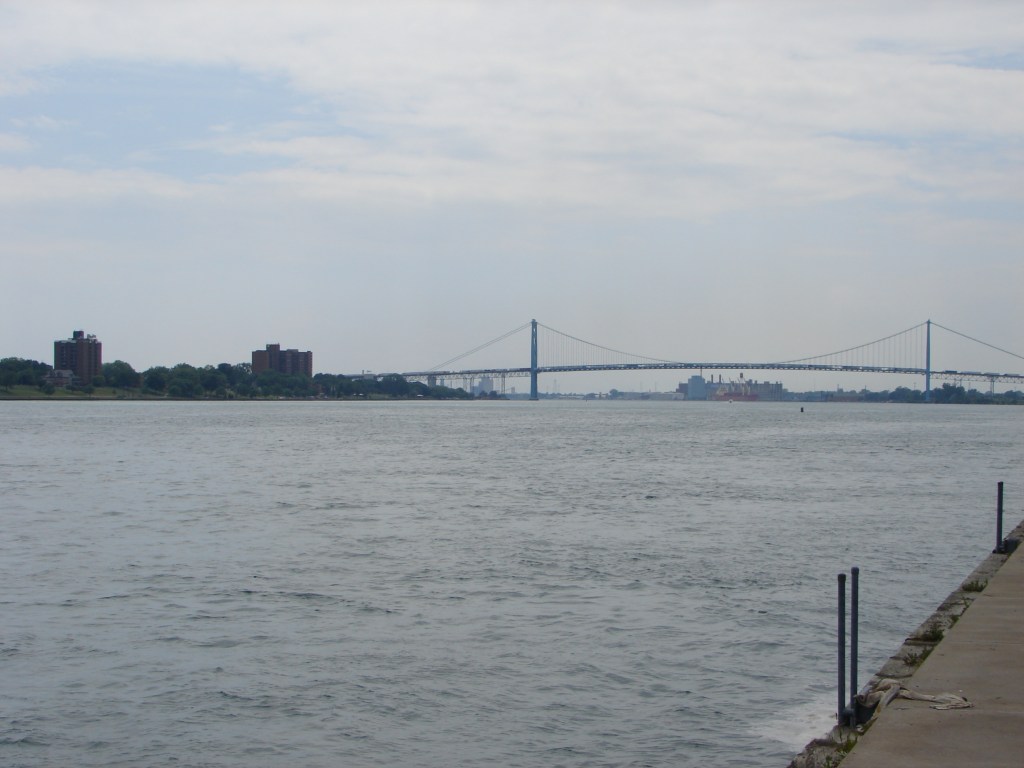
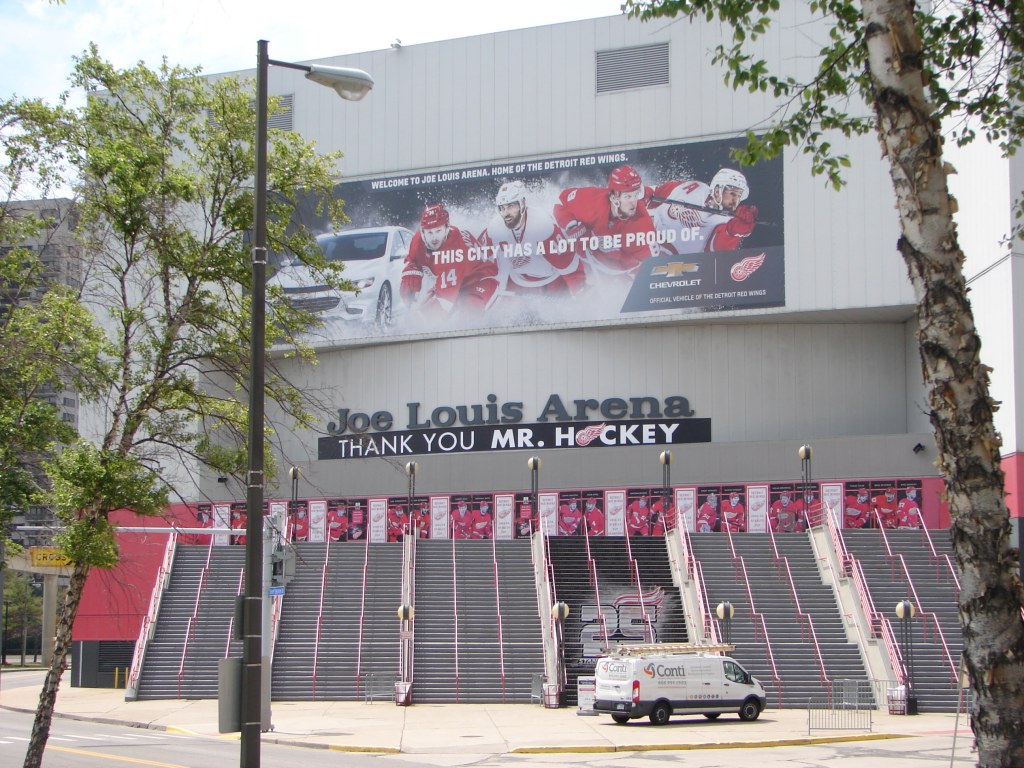
Had to rest in the quiet and cool atmosphere of Cobo Hall. Walking from the Guardian Building, past the Spirit of Detroit statue, through Hart Plaza, along the river to Joe Louis Arena, I looked forward to riding the People Mover back through the area. However, rail replacement closed the public transportation, making for a long walk back under the blaze of the mid-day sun. I wrote this in my notebook as I cooled.
The People Mover provided me the opportunity to cover Downtown Detroit on foot. In the sun. With highs in the upper 80’s.
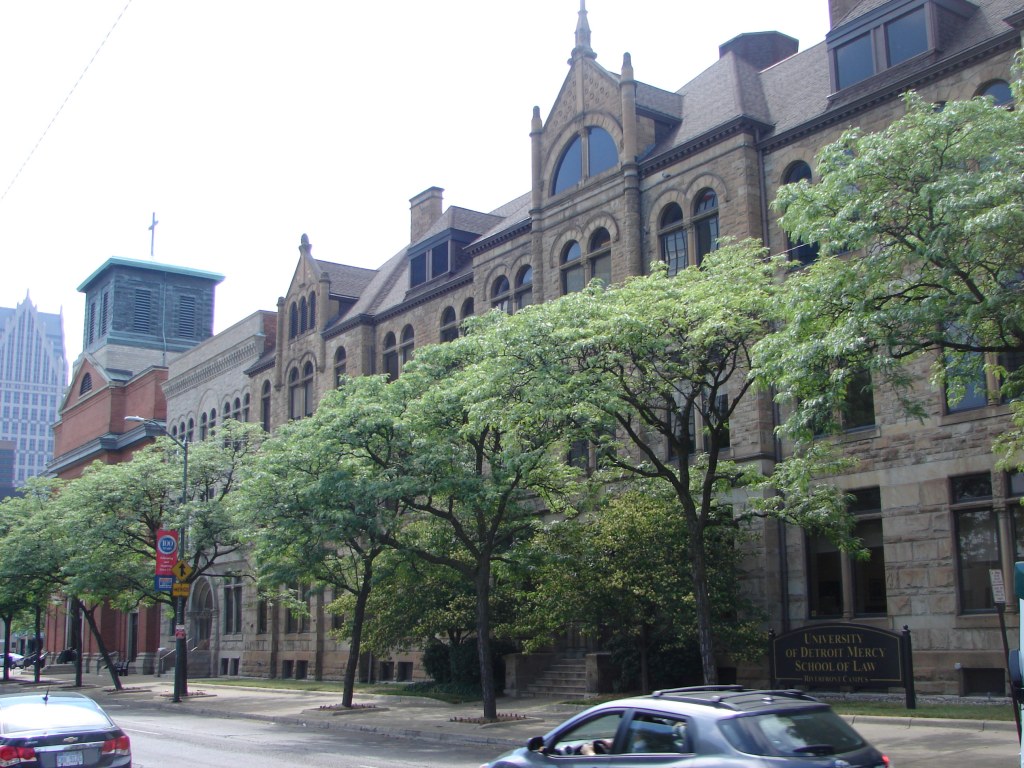
The place that made me what I am today, as a writer and lawyer.
The First National Building. I worked for the City of Detroit Law Department in the Labor & Employment Section while in law school. My office was in the shaded indented section, fifteen floors up.
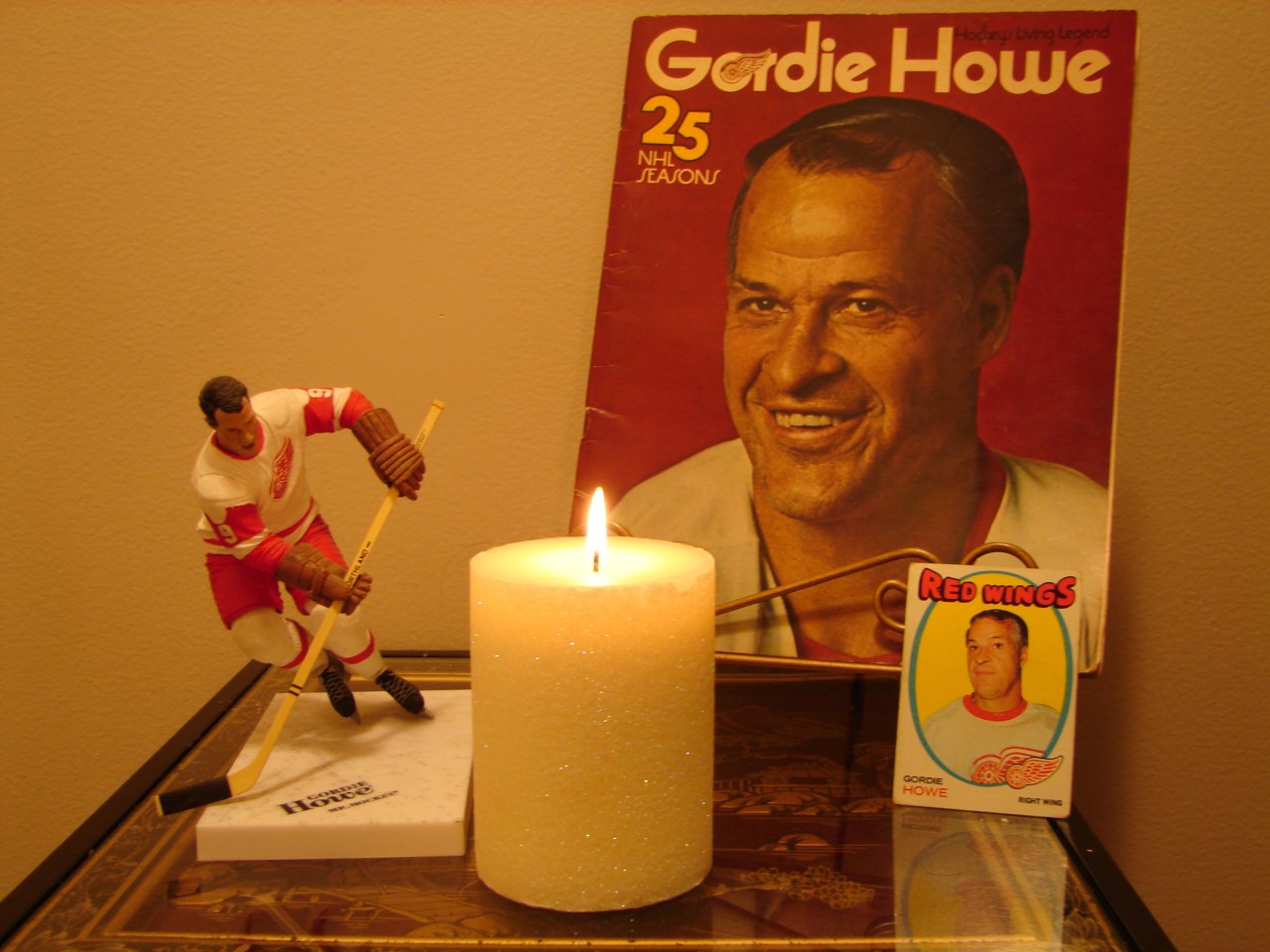
If you are from Michigan, and have been involved in hockey in any way, chances are you have a Gordie Howe story. Learning of his passing from a friend who I was having lunch with at Schuler Books & Music in Grand Rapids, MI, rekindled memories of my brief moments with this legendary man.
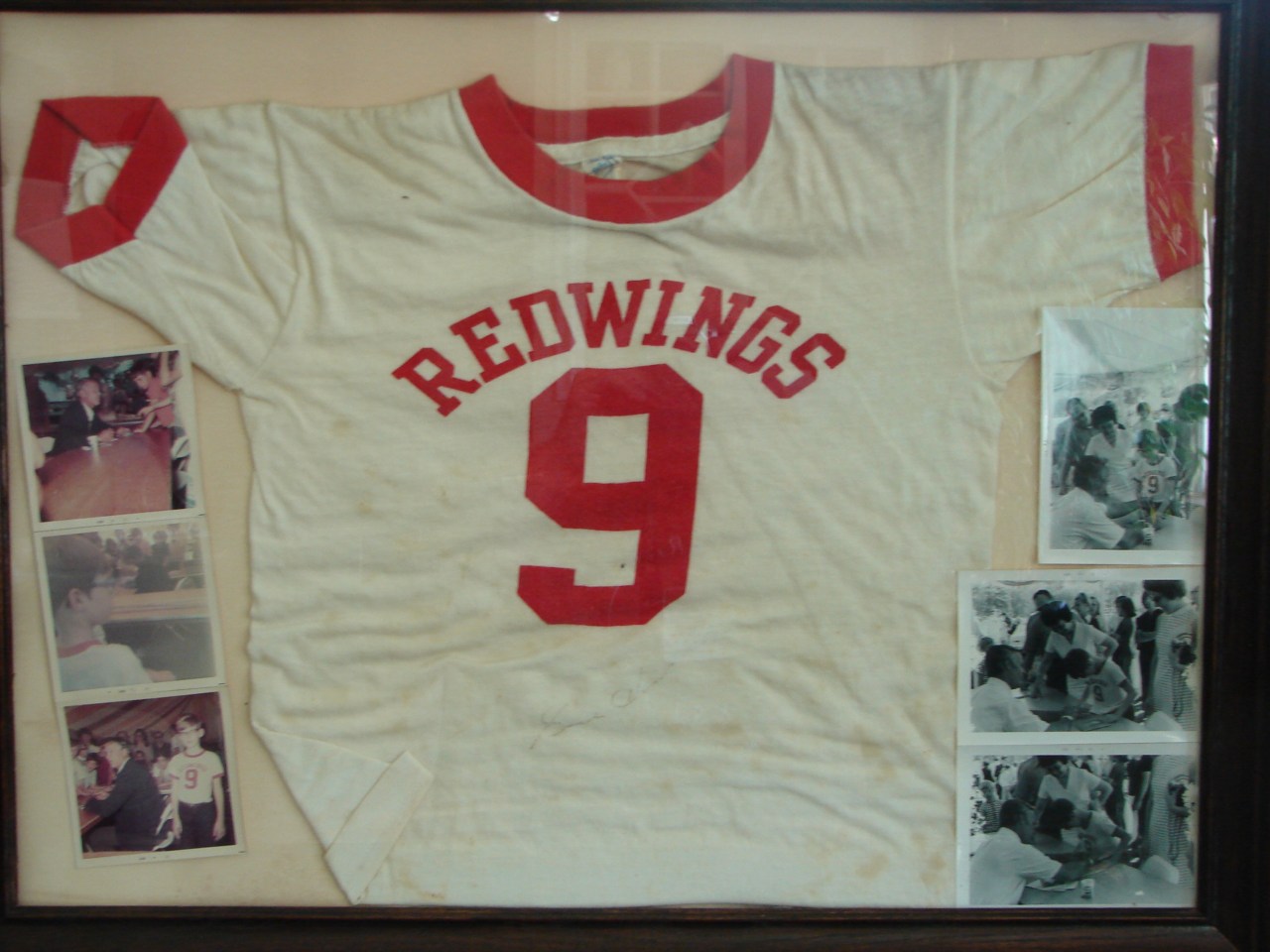
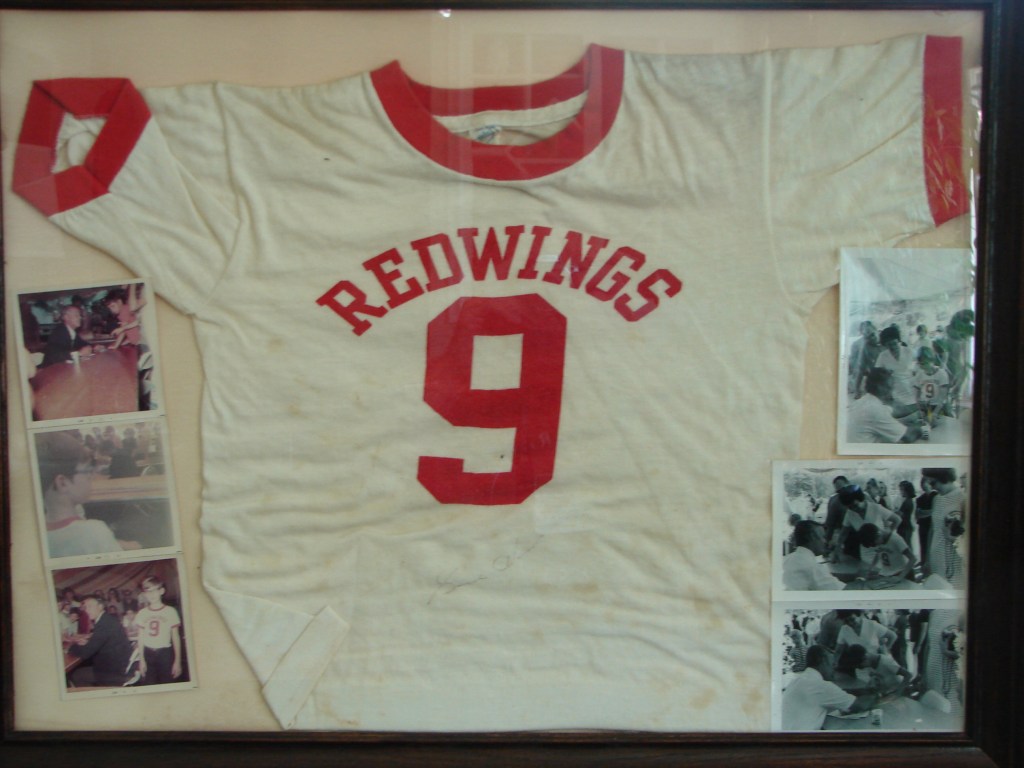
The oldest memory has been with me for decades. It hung in my parents’ basement until recently when it found a place in mine.
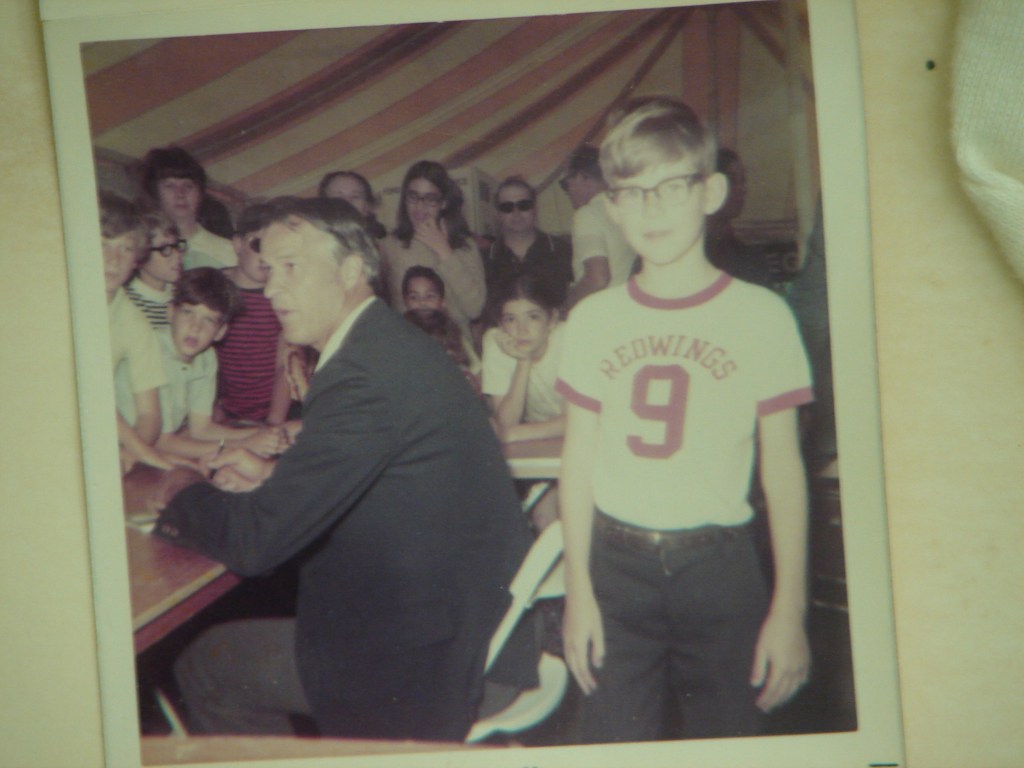
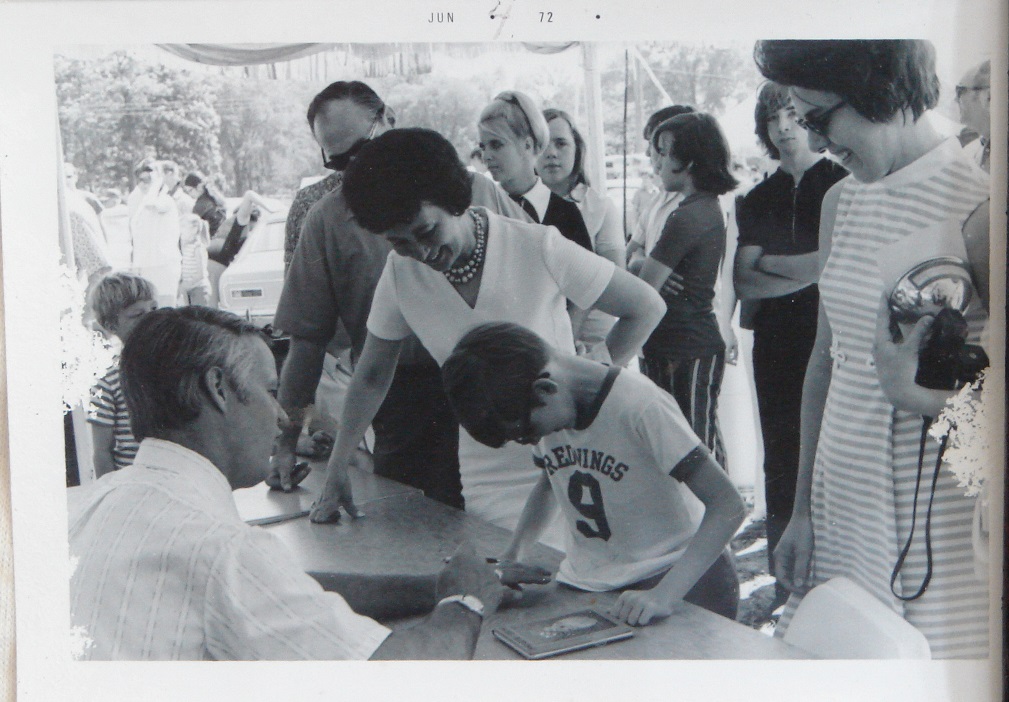
My aunt worked for the Ford Motor Car Company. In June, 1972, after Gordie retired from 25 seasons with the Detroit Red Wings and before he signed with the Houston Aeros of the WHA, Ford hosted an event where they brought Gordie in to sign autographs. I was nine-years-old and had recently found hockey to be my favorite spectator sport. I attended my first hockey game on January 9, 1971 – a 3-2 Detroit victory over the Buffalo Sabres at the Olympia. My parents talked up Gordie, while I, being a youngster in the 70’s, was drawn to Gary Unger, and his flowing long hair (The Wings’ traded Unger less than a month after my first hockey game).
At the Ford event, Gordie was situated at a table. My mom took some photos of me standing near him or with me in the background.
Can you imagine a kid being allowed to get this close to a sports superstar today?
We then stood in line and waited to have him sign my autograph book. When my turn came, I nervously and silently placed my autograph book before him. He didn’t open it. Instead, he noticed the shirt I was wearing. He took the shirt at my waist and pulled it toward him. Then he pressed the ballpoint pen against the material, signing his name. I was stunned. A few days later, a Ford photographer at the event talked to my aunt at her office, saying he had photos of Gordie autographing my shirt. He gave them to her, and my parents framed the shirt and photos. Touched by greatness, I was inspired. That fall, I signed up for the only season of sports I ever played – a house-hockey league at the Plymouth Cultural Center.
Hanging on the wall in my parents’ house, it always reminded me about how attentive and kind this man was. As the years went by, and I became more involved as a fan, spectator, booster club president, photographer, and columnist in the sport, it was also a reminder of the contrast between him and the next generation of superstars. He did not think his superstar status made him superior to us. He was one of us, appreciative of our adoration.
I remember watching the 1979-80 NHL All Star game. No. Scratch that. I remember nothing about the game. It was played at the brand new Joe Louis Arena in Detroit, and the only thing that mattered was the pre-game player introductions, saving the Hartford Whalers’ right winger for last.
Still gives me chills. Man’s example of humility.
Though the 1979-80 season was his final year of hockey, he was not done. There was one record yet to break.
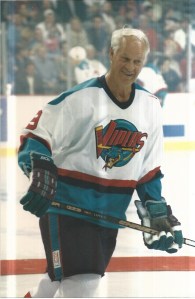
I started photographing and writing for Great Lakes Hockey Alliance – a free monthly newsprint hockey publication covering all the Michigan hockey teams in the NHL, IHL, UHL, OHL, & CCHA – in 1997. I photographed Detroit Vipers’ games at The Palace of Auburn Hills. It was magical timing. After so many photos from the stands, having a press pass and seeing my photos published was thrilling. To cap it off, the Detroit Vipers won the 1997 Turner Cup, allowing me to go on the ice, capture team and player shots with the Cup, and the celebration in the locker room afterward with players’ friends and family. Life was good. Then, it got better.
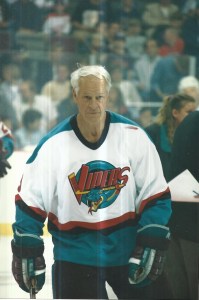
For the home opener of the 1997-98 season, not only would the Vipers raise the Turner Cup Champion banner, they would start the season with #9, Mister Hockey, in the line-up. It was an opportunity for Gordie Howe to be the only athlete to play a professional sport in six decades, breaking Minnie Minoso’s record of playing in Major League Baseball in five decades. Minoso was present at the event.
Things were definitely different that evening. The press box was overflowing with reporters from across the globe, as I went to pick up my media notes.
When I descended from the heights of the stadium to my usual spot at ice level – the box between the players’ benches – three photographers had climbed in to get photos. They did not like shooting through the glass, so one-by-one they climbed out. I reclaimed my place.
The Palace, packed with 20,182 fans, provided another standing ovation for #9.
He skated the first shift; forty-seven seconds of historic ice time. Vipers defenseman, Bobby Jay, moved the puck into the Kansas City Blades’ zone, then passed it to Howe, who redirected the puck on net. Another shot on goal to his professional career statistics.
Gordie coming back to the bench after his shift.
He stayed on the bench during the first and second period, not returning for the third. Which was too bad. At the end of the third period, the score was tied 4-4. The IHL had the shootout as a way of breaking ties (the NHL did not implement the shootout until 2005, nineteen years after the IHL adopted it in 1986). Imagine if Gordie had been on the bench for the shootout, skated onto the ice, went one-on-one with the goalie, and scored. Would The Palace have had to rebuild its roof?
The power of Gordie Howe transcended generations. The following season, the Vipers celebrated his 70th birthday as a promotion night. I arrived early at the game, and was walking through the corridor by the locker rooms. Most Vipers games started at 7:30, with the doors opening to the public at 6PM. Before the doors opened to the public, little league hockey teams would play on the ice. I stood in the hallway as the kids – probably the same age I was when Gordie signed my shirt – waddled by on the blades of their skates, weighed down by their equipment, on their way to the locker room. Gordie, randomly patted one of the kids on his helmet as he walked by and said, “You played good.” The kid looked up, then stopped. Awestruck. The look on his face was one of a kid empowered. Gordie Howe said I played good.




















































 DoHaeng Michael Kitchen